
Governed AI · Program & Portfolio Software
Two AI lines. Different labs. One audit trail.
CT Command runs program and portfolio work with a management line of agents — risk and issue management, communications and data — then a separate line, running a different model from a different lab, performs quality assurance and independent verification on that work before anything reaches you. For campaigns, committees and institutions where being confidently wrong is not survivable.
In production today, running the company that builds it.
Client deployments ahead of the 2028 South Carolina primary.
Civic and electoral programs run against deadlines that do not move, budgets that get audited, and opponents who are looking for your mistakes. An AI that invents a number under those conditions is not a productivity tool. It is a liability.
The product
One system you work inside.
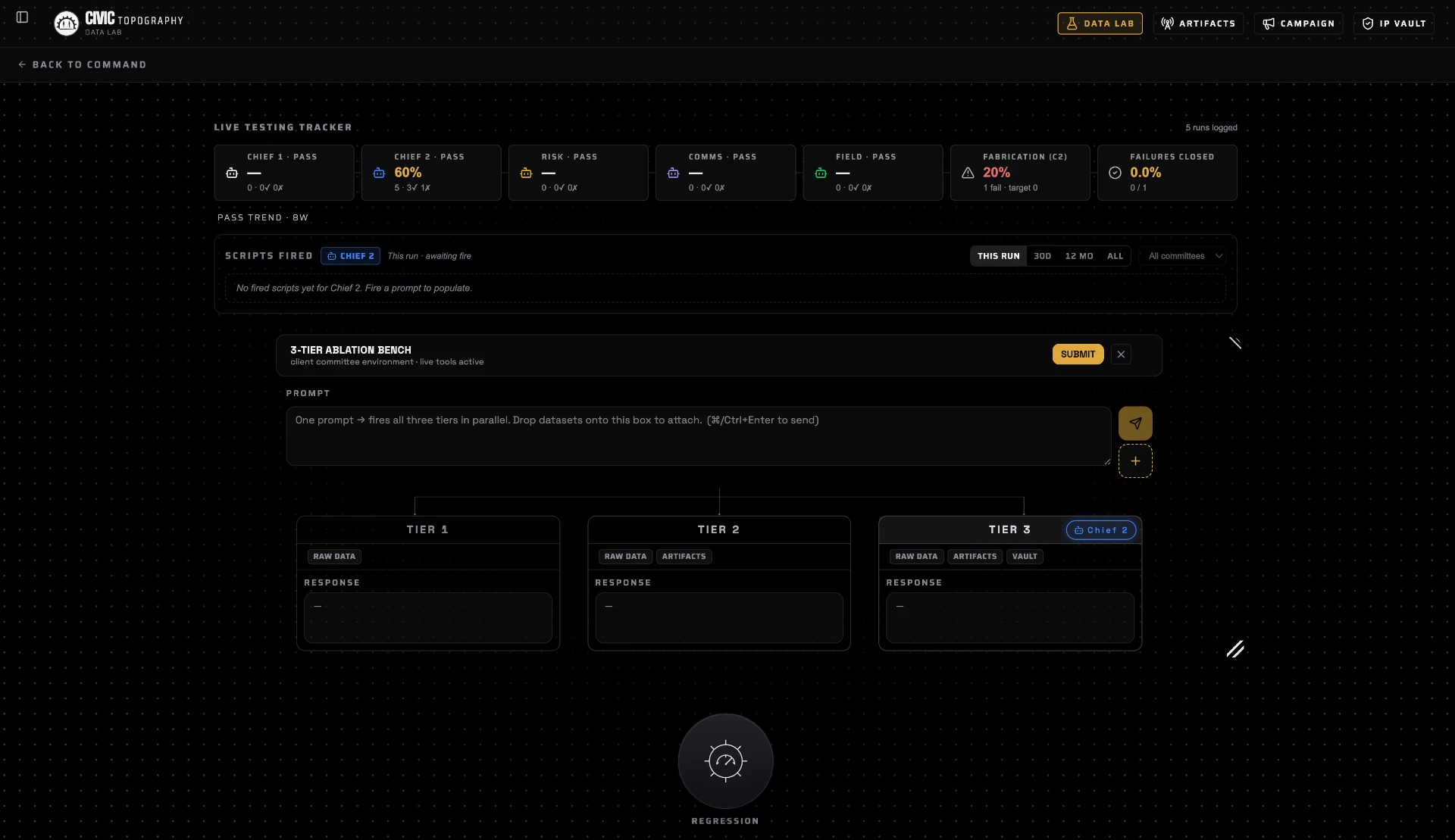
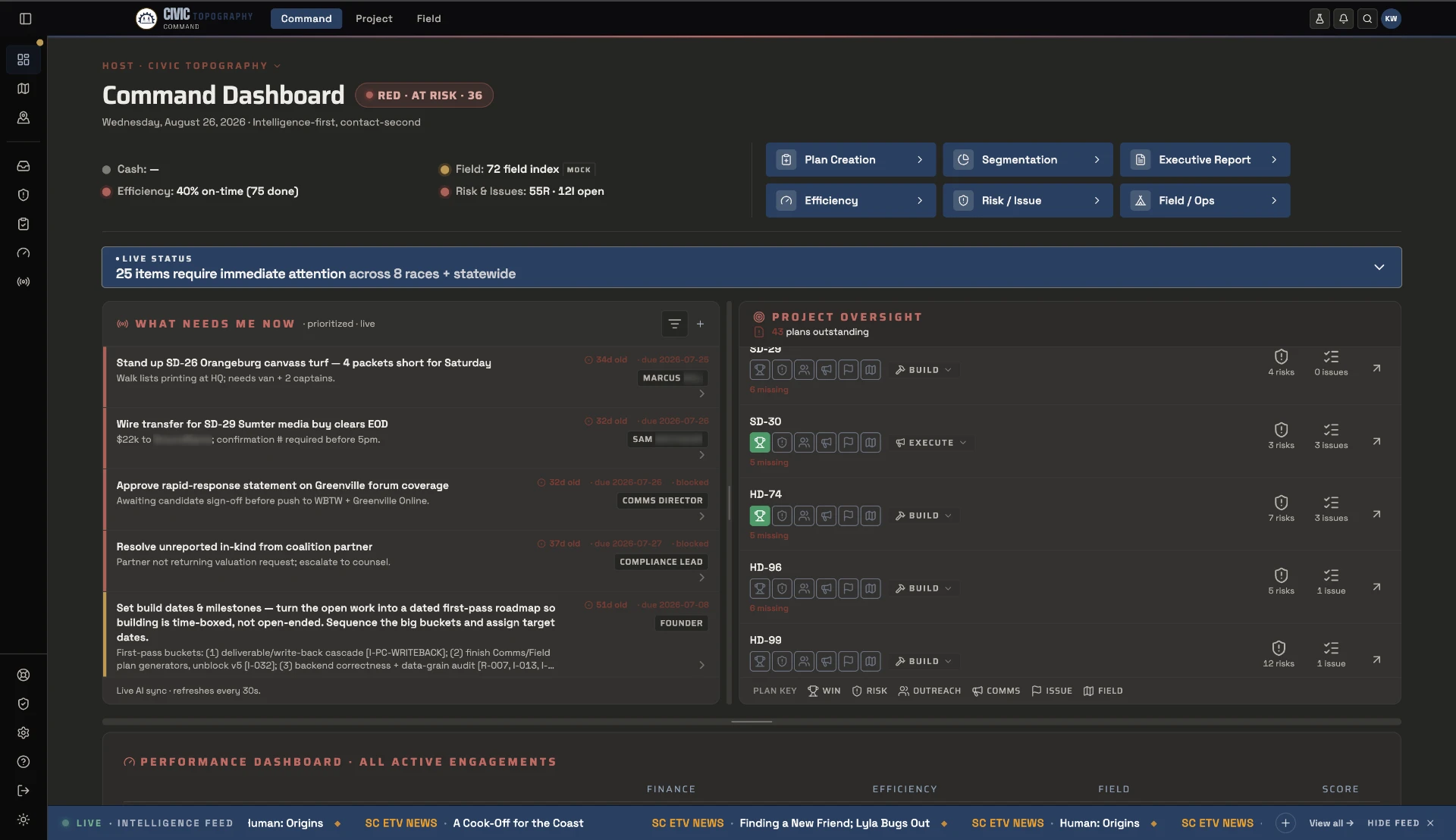
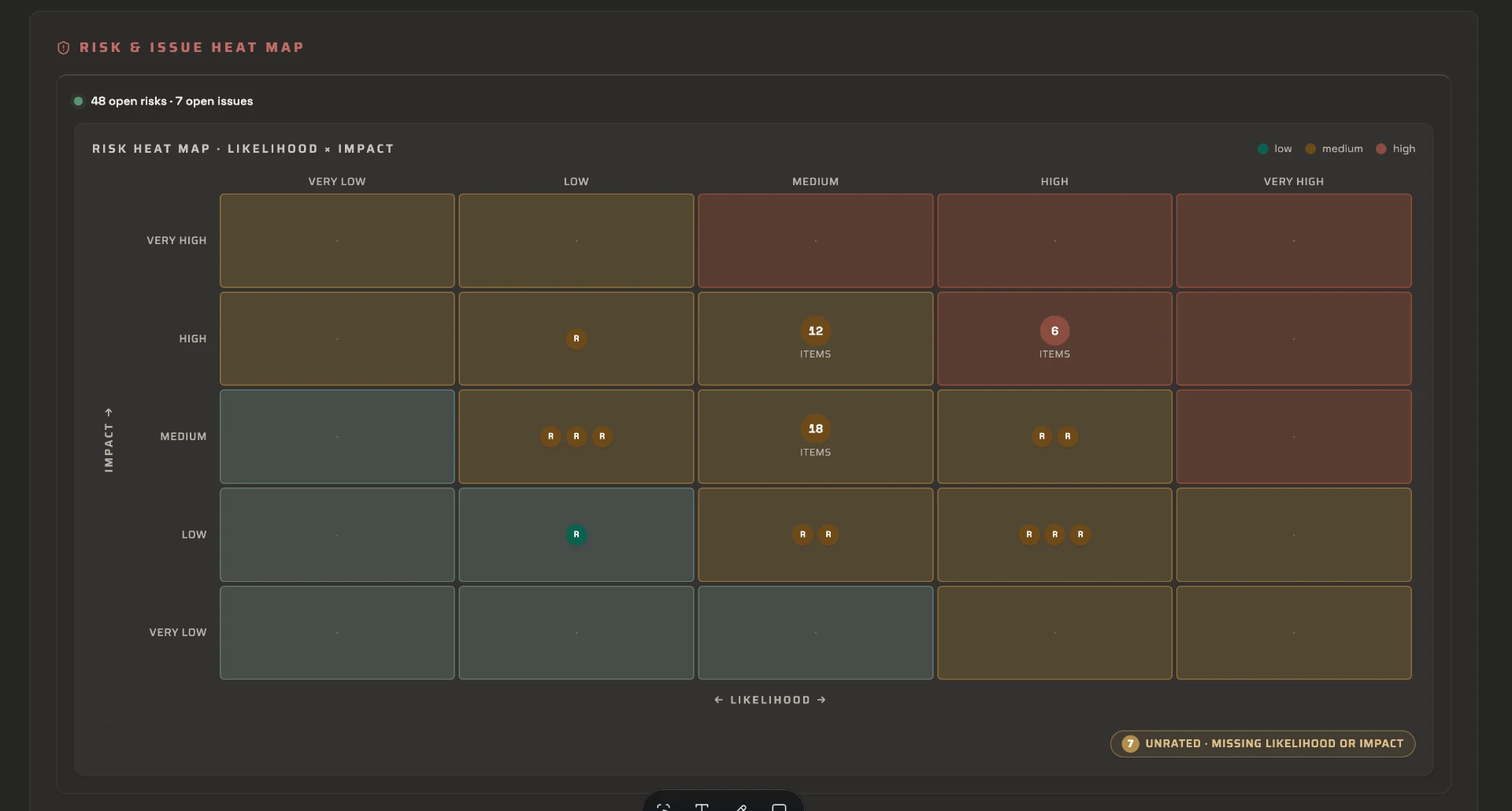
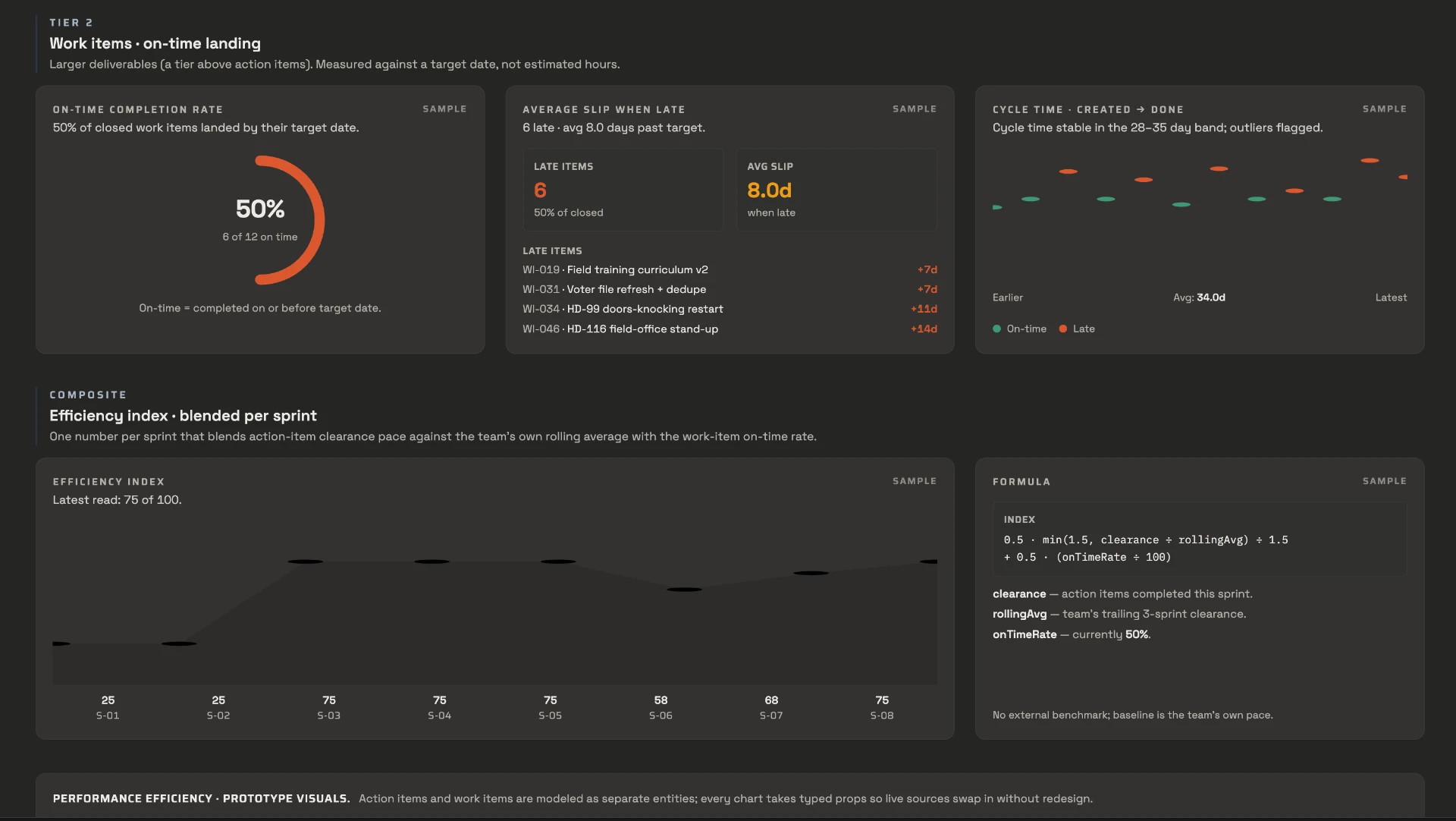
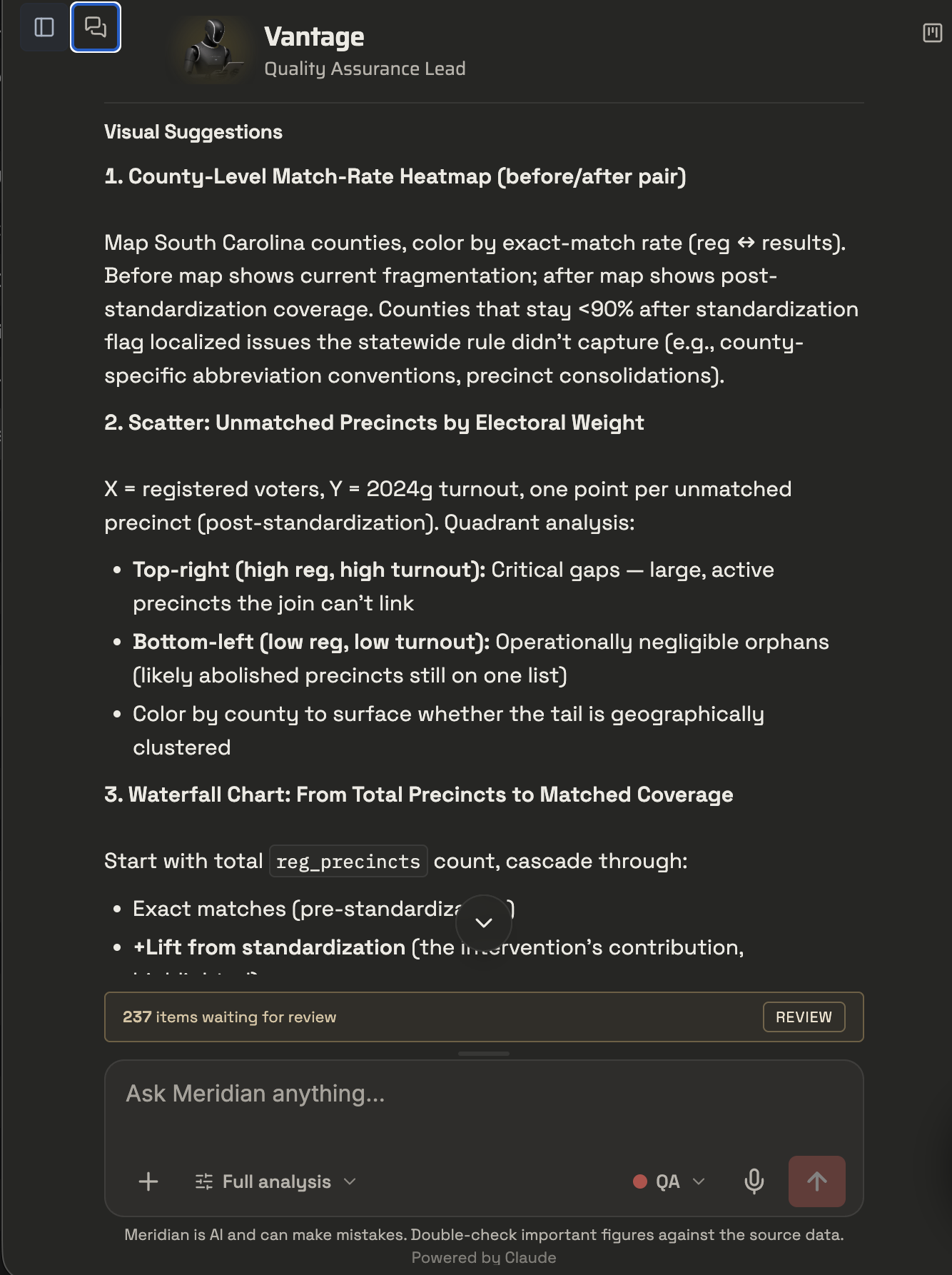
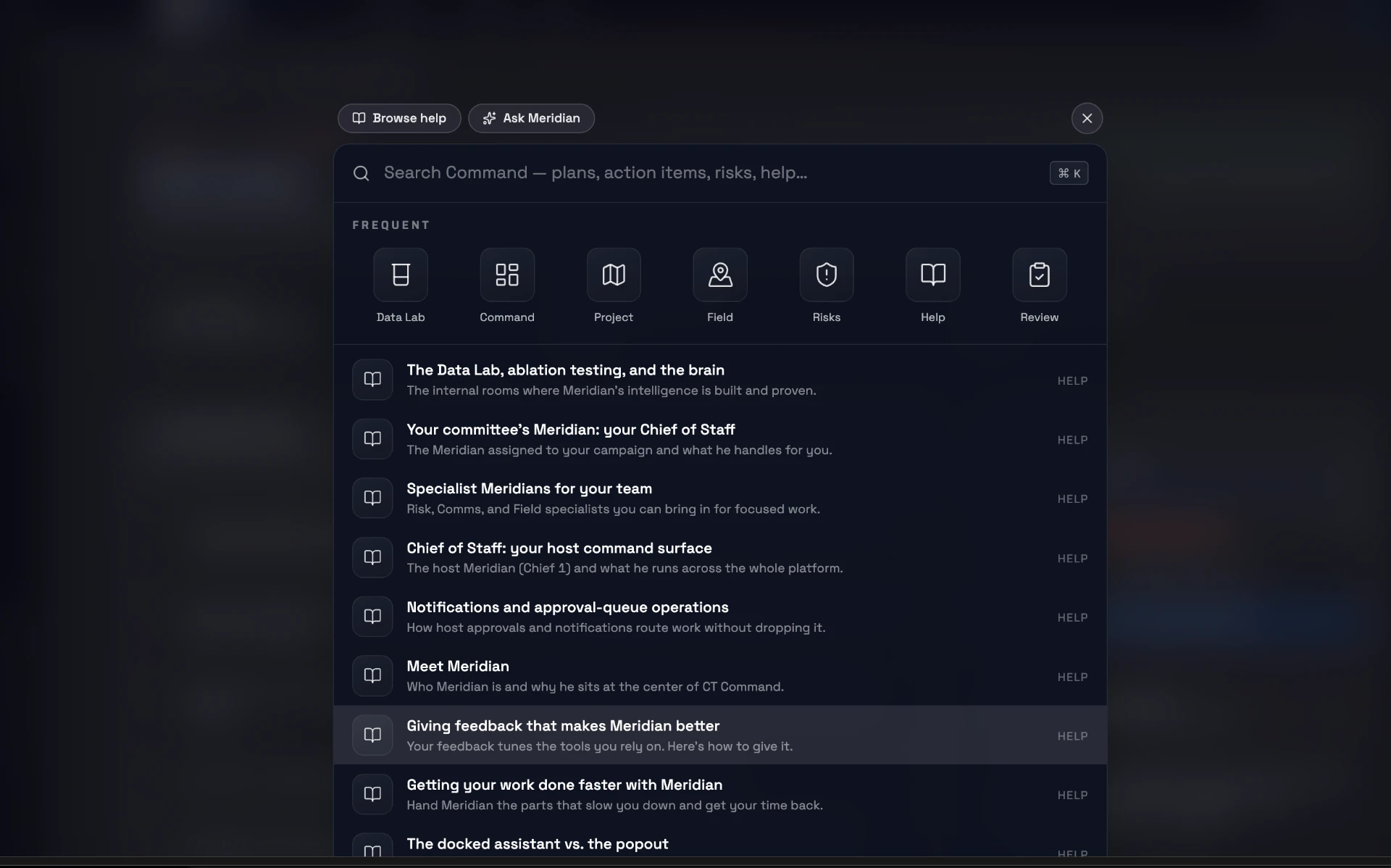
Demonstration data throughout. Names and vendors are redacted placeholders, not real people or firms.
Platform preview · Swipe to browse · Click any screen to enlarge
At launch
What a design partner gets
A governed record of your state
Statutes, officials, meetings, decisions, and the public comment that lands on them, kept current, with every fact carrying its source and its date.
Work packages
Name the package and the whole scope loads, already sized, sequenced and assigned. You start the meeting halfway through the project.
A human gate on everything
Nothing becomes fact because an agent said so. Every write into your systems passes a person, and the refusals are recorded too.
An independent verification line
A second line running a different model from a different lab checks the work before it reaches you, and never sees how the first line reasoned.
A testing bench you can run
Write a rule you want your agents to follow, then watch it tested against your own work, blinded, with no prior experience assumed.
A board that tells you what has gone stale
Every piece of the record carries a confirm-by date, tiered by how fast that kind of thing actually drifts.
Some capability is still in build. Design partners are told which, and when.
Agents work across the tools you already run and write back under human sign-off. Nothing is ripped out and replaced.
CT Command currently reads public federal campaign-finance data directly. Additional client-system integrations are enabled during deployment where the organization holds the required credentials and the vendor provides API access. Google Workspace and Slack use available platform connectors; political-stack integrations, including NGP VAN, ActBlue and Mobilize, remain client- and vendor-gated and have not been validated in production.
Why a different lab
The separation is the point.
A model checking its own work shares the assumptions that produced it. The published research is clear that debate among copies of one model is not reliably better than a single careful pass, and that drawing the agents from different models is what changes the result. So our verification line is a different model from a different lab, and it never sees how the delivery line reasoned.
The full method, the standards we assess ourselves against, and the research →
Who's behind it, and why
Built by an operator who ran the work by hand first.
Civic Topography was founded by Kyle Watson, a Project Management Professional certified by the Project Management Institute since 2016, with more than twelve years delivering SaaS implementations and digital transformations across private industry, state government and campaigns. He held independent oversight of a statewide Medicaid eligibility system at CSG, reporting to the state rather than to the integrator, and carried P&L for a FedEx Office center. At the South Carolina Democratic Party he ran a $2.1M IT budget, spent two years running the statewide voter data platform, and served as interim chief of staff — writing the party rules for the state convention and staffing the delegation through to the national convention. He led the advance operation for more than twenty presidential campaign trips, and recovered an IT project on a congressional campaign.
He is an MBA candidate at the University of South Carolina's Darla Moore School of Business, earning graduate certificates in Artificial Intelligence in Business and in Strategic Innovation, expected May 2027.
Separately from that coursework, his own research interests run along two lines: professionalizing political operations management as a formal discipline, and the governance and independent verification of AI agents doing consequential work. He is authoring the Political Operations Management Framework, a delivery standard derived from PMBOK for a domain that has never had one.
The through-line is a conviction: better controls do not just produce better campaigns. They produce better governance.
Civic mission
Return on civic investment
In 2016 the federal government decided its own programs deserved professional program management, and passed the Program Management Improvement Accountability Act to require it — standards, a career path, and accountable officers at every major agency. Civic and electoral organizations never got that. They run some of the highest-stakes, shortest-deadline programs in American life on improvised process, and the public pays for the difference in wasted money and broken delivery.
Civic Topography exists to close that gap: to bring internationally recognized project management practice to civic work, and to make the results auditable by someone other than the people who produced them. Money spent on campaigns and civic programs is money spent on how the country governs itself. It should be managed like it.
Become a design partner
Design partners shape what ships
Every deployment starts with a conversation. Tell us about your race, your organization, or what you need the system to run. Design partners get the build shaped around their work, and we respond within 24 hours.